Quick Summary: Chemical awareness training gives workers the basic skills to spot hazards, read labels and safety data sheets, and respond to spills, but it is not a substitute for task-specific instruction or a formal risk assessment. The article stresses building a live chemical inventory, applying controls in order of effectiveness (elimination, engineering, procedures, PPE last), and refreshing training every one to three years. Guardian Safety offers courses that map directly to workplace chemicals and tasks.
A cleaner diluting bleach, a mechanic degreasing a part, and a maintenance worker pouring solvent each face different chemical risks. All three tasks happen in ordinary workplaces, and all three can cause burns, breathing problems, or worse when handled without proper knowledge. That is where chemical awareness training comes in.
Many Irish employers assume a safety data sheet on file is enough. It is not. Staff need to know what they are using, what harm it can do, and what controls protect them. This guide explains what a chemical handling course should cover, how chemical safety training links to real risk controls, and where awareness ends and formal assessment begins. Guardian Safety has delivered certified safety training to Irish workplaces for years, and this guide draws on that day-to-day experience.
What Chemical Awareness Training Covers
Chemical awareness training gives workers the basic knowledge to spot hazards, handle products safely, and know what to do when something goes wrong. It is an introduction, not a deep technical course. Good training links what you learn in the classroom to the controls you use on the floor every day.
Recognising Hazards and Exposure
The first part of any course teaches you what makes a chemical dangerous. You learn the main hazard groups: flammable, corrosive, toxic, and irritant. You also learn how chemicals enter the body. Breathing in fumes, swallowing, skin contact, and eye contact are the four main routes.
The trainer shows real examples from everyday work, like cleaning products, paints, solvents, and fuels. You practise spotting risky tasks, such as mixing bleach with other cleaners or decanting liquids without gloves. You also cover simple controls: ventilation, protective equipment, safe storage, and good hygiene. Training like this, such as a chemical awareness course, is the starting point before any task-specific instruction.
Understanding Labels and Safety Data Sheets
Labels and safety data sheets carry the information workers need most. The course explains the red diamond pictograms used across the EU and what each one means. You learn to read product names, hazard statements, and precautionary phrases quickly.
Safety data sheets have 16 set sections. The course shows which ones matter day to day: first aid steps, storage rules, and what to do after a spill. You practise finding answers fast instead of reading the whole sheet.
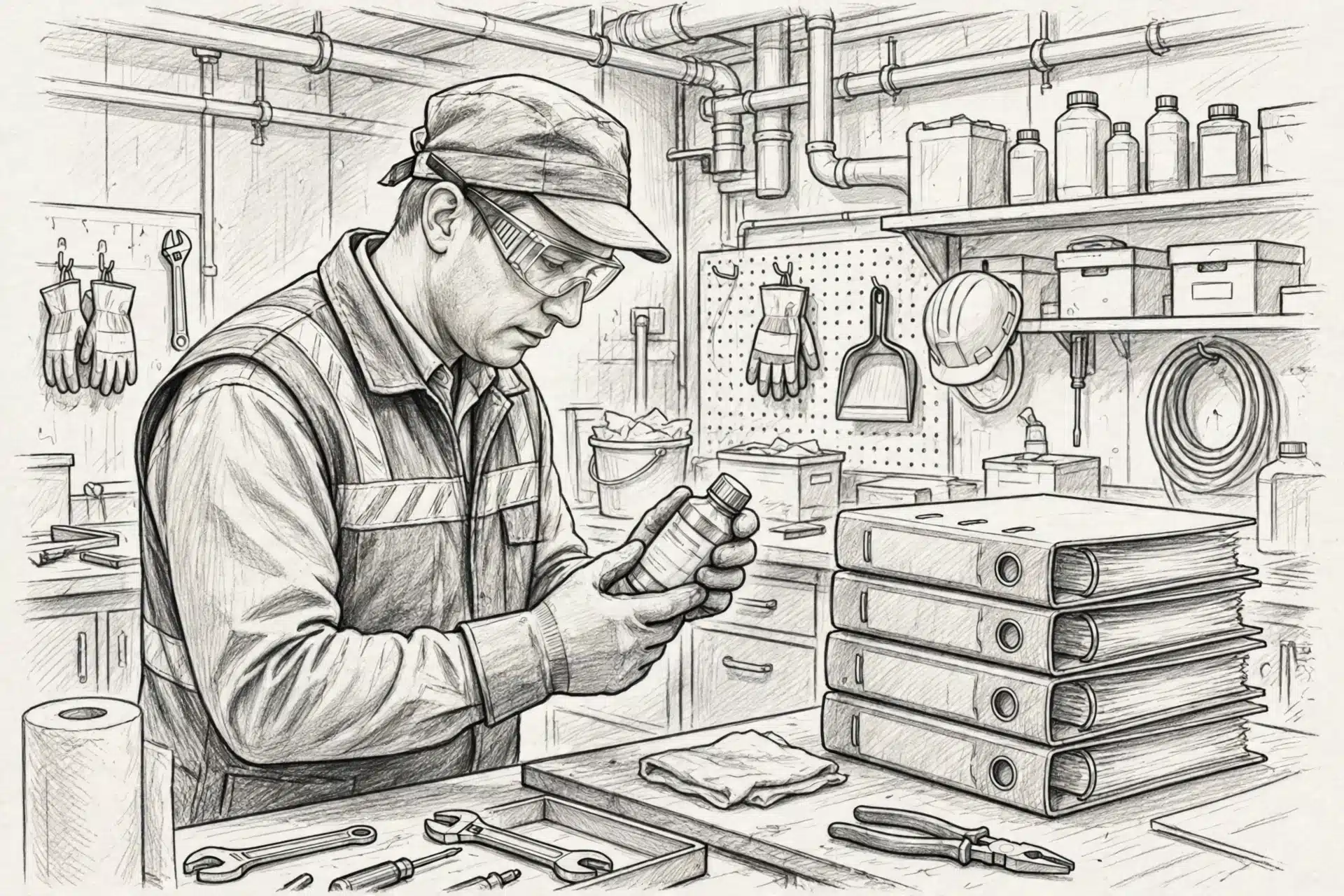
Identify Chemicals and Assess the Workplace Risk
Build a Useful Chemical Inventory
Start by walking the workplace and listing every chemical you find. Include cleaning products, oils, glues, paints, fuels and anything in the stores you forgot about. The HSA chemical publications include a free inventory template aimed at small and medium businesses.
For each entry, record the product name, supplier, quantity, storage location, and what it is used for. Keep the current safety data sheet (SDS) beside each entry. Irish suppliers must give you an SDS for any hazardous chemical, free of charge, with the first delivery. Ask for an updated sheet if the one you hold is out of date.
Tip: An inventory is only useful if it lives. Add new chemicals when they arrive and remove ones you no longer use.
Assess Exposure and Risk
An inventory tells you what is on site. A risk assessment tells you what could actually harm someone. The label and SDS are your main sources of hazard information, so read them before you judge the risk. Note the pictograms, hazard statements and any occupational exposure limits.
Then look at who is exposed, how often, and by which route: breathing in vapour or dust, skin contact, or swallowing. Where several chemicals are used together, assess the combined risk, not each one in isolation. Rate each risk low, medium or high and record the controls you will apply. Workers must be told the findings. Our chemical awareness training helps staff understand the hazards behind each sheet.
Review the assessment after a spill, a near miss or any change to how you work.
Choose Controls for Safe Chemical Handling
Training tells people what the risks are. Controls are what actually keep them safe. Pick controls that match each task, not just the chemical’s label.
For reference, please see the HSA publication on steps to chemical safety. HERE
Apply Controls to the Task
Start with the job, not the bottle. Diluting a strong cleaner once a week needs different controls than spraying it all day. Ask three questions: how is the chemical used, how much is used, and how close does the worker get?
The hierarchy of controls ranks options from most to least effective:
- Remove the hazard, or swap in a safer product.
- Use engineering controls like closed systems and local exhaust ventilation.
- Set safe work procedures and limit exposure time.
- Supply personal protective equipment as a last line of defence.
Skipping to PPE alone is the most common mistake. Gloves and goggles help, but they fail when people fit them badly or wear the wrong type. Match the glove material to the chemical too, since nitrile, latex and rubber each resist different products.
Our chemical awareness training shows workers how to match controls to real tasks.

Store, Move and Dispose of Chemicals Safely
Good storage prevents most chemical incidents before they start. Keep chemicals in their original, labelled containers. Store incompatible products apart, for example bleach away from acids, because mixing them releases toxic gas. Use bunded trays to catch spills and lock storage areas against unauthorised access.
When moving chemicals, use trolleys for heavy containers and check lids are sealed first. Pour slowly and never leave decanting work unattended.
Dispose of chemicals as the safety data sheet directs. Never pour solvents or oils down drains. Keep a licensed waste contractor’s records as proof of proper disposal.
Tip: Walk your storage area every few months. Leaking containers and missing labels are easy to fix when caught early.
Prepare for Spills, Exposure and Other Incidents
Even with good controls, accidents happen. A drum gets knocked over. A splash hits a sleeve. What matters is how fast and how calmly your team responds.
Know the Site Procedure and Limits of Your Role
Every site needs a written spill and emergency procedure, and every trained worker should know their part in it. Can you contain a small spill yourself? Do you call for help instead? Where are the spill kits, eyewash stations and emergency showers? A good chemical awareness course walks through these questions, but it cannot replace site-specific instruction. You are trained to recognise the danger and act within your role, not to handle every emergency alone. When a situation exceeds your training, step back and raise the alarm.

Report Exposure and Review What Happened
Any splash, spill, or suspected exposure must be reported the same day, even if it seems minor. Some health effects appear hours or weeks later, so a record protects you and helps your doctor act fast. The employer should then review the incident: what failed, and which control needs fixing? Near misses count too. Each one is a free lesson.
| Incident | First Response |
|---|---|
| Small spill | Contain with spill kit if trained |
| Skin or eye contact | Rinse, follow SDS first aid, report |
| Large or unknown release | Evacuate and raise the alarm |
Make Training Relevant, Recorded and Current
Match the Course to the Work
Chemical awareness is not one course for every workplace. A cleaner using descalers and disinfectants faces different risks than a lab technician or a maintenance fitter. Training should mirror the products, tasks, and quantities your staff actually deal with.
Start with your chemical inventory. Which products appear most often? Which carry the highest risk? Then check who uses them and how often. General awareness suits most employees: reading labels, understanding safety data sheets, and knowing what to do in a spill. Staff with hands-on duties need task-specific instruction on top of that.
Match the format to the role too. Online modules work well for awareness-level content, while practical handling scenarios suit on-site sessions. If you are unsure what level of training your workplace needs, our guide on choosing a health and safety training provider covers the questions to ask.
Ask this before booking anything: can the trainer explain how the course maps to our chemicals and our tasks? If not, keep looking.
Check Understanding and Refresh When Needed
A signed attendance sheet proves someone sat in a room. It does not prove they can read a hazard label or handle a spill safely. Build short checks into your training: a quiz, a walkthrough of your own labels, or a spot question a month later.
Refresher timing matters as well. Skills fade, products change, and regulations move on. Most workplaces revisit chemical awareness training every one to three years, and sooner whenever a new high-risk chemical arrives on site. Keep training records with dates, content covered, and who attended, so you can show compliance at a glance during an inspection.

Chemicals in your workplace need more than a poster on the wall. Guardian Safety’s chemical awareness training gives your team the skills to handle, store, and assess risks safely. Book onsite or online today.
Chemical Awareness Training – Online eLearning Course
Protect your employees and create a safer working environment with Guardian Safety’s Online Chemical Awareness (COSHH) Training Course. This comprehensive, 125-minute eLearning programme is designed for employees, supervisors and managers who work with or may be exposed to hazardous chemicals and substances. The course covers chemical hazards, routes of exposure, hazard symbols and labelling, risk assessments, safe handling procedures, exposure control measures and emergency response planning. Participants will also gain an understanding of relevant chemical safety regulations, including REACH and CLP. Delivered entirely online, the training provides a convenient and flexible way to develop essential chemical safety awareness, helping businesses reduce workplace risks, protect employee health and support compliance with Irish health and safety legislation. Invest in chemical safety awareness today and help prevent workplace accidents, injuries and harmful exposure.
Find out more HERE
Conclusion
Chemical safety starts with knowing what you handle and how it can harm you. Awareness training gives every worker that basic knowledge. Task-specific instruction then covers the exact products and procedures for each job, while a formal chemical risk assessment sets out the real controls: safer substitutes, enclosures, ventilation, and the right protective gear.
Remember the boundary. An awareness course does not replace a risk assessment, and neither replaces hands-on instruction for the task at hand. Employers hold the legal duty; workers share the duty to follow controls and report problems. If your team works with chemicals and needs structured training, our chemical awareness course covers hazard labels, safety data sheets, and safe everyday handling. Review your controls whenever a product, process, or person changes.